Tags
art, Berlin, Germany, photography, photowalk, random, street art, Travel, urban

Another sample of the street art adorning a remaining section of the Berlin Wall in eastern Berlin, known as the East Side Gallery.

10 Tuesday Jan 2017
Tags
art, Berlin, Germany, photography, photowalk, random, street art, Travel, urban
Another sample of the street art adorning a remaining section of the Berlin Wall in eastern Berlin, known as the East Side Gallery.
08 Sunday Jan 2017
Posted in art, Berlin, photography, photowalk, photowalking, random, urban
Tags
art, Berlin, photography, photowalk, random, street art, Travel, urban

Here’s another piece of art adorning a panel of the remnants of the Berlin Wall, along what’s now known as the East Side Gallery. Captured this back in September.
04 Wednesday Jan 2017
Posted in art, Berlin, photography, photowalk, photowalking, random, Travel, urban
28 Monday Nov 2016
Posted in art, Berlin, Germany, history, photography, photowalk, photowalking, random, Travel
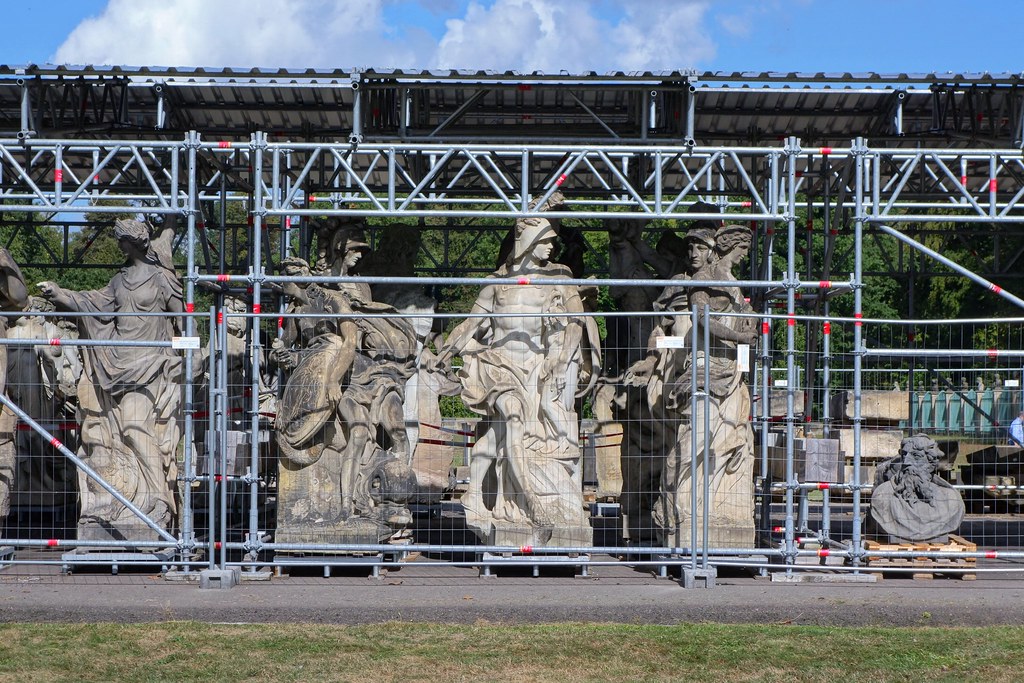
At Sanssouci Park in Potsdam, near Berlin, a number of statues were moved out of the New Palace (Neues Palais) there, owing to restoration and renovations in the building. It made for an unusual capture when I visited this September.
18 Friday Nov 2016
Posted in Berlin, Germany, photography, photowalk, photowalking, random, Travel

Here are two adjacent landmark towers in eastern Berlin.
One is a TV tower constructed by the communist East Germans as a status symbol visible from far and wide.
The other, Marienkirche (St. Mary’s Church), is the oldest church in Berlin. The land has been home to a church in some form or another since at least 1292.
17 Thursday Nov 2016
Posted in Berlin, Germany, photography, photowalk, photowalking, random, transportation, Travel, urban
Tags
Berlin, Germany, photography, photowalk, random, transportation, Travel, urban, woonerf
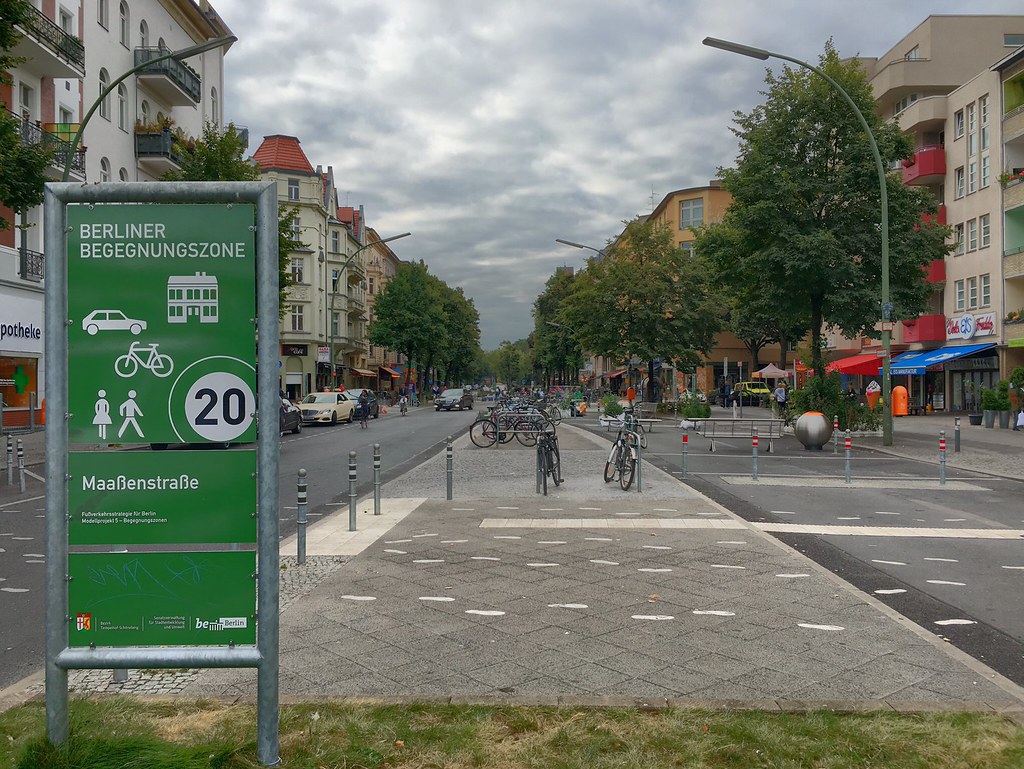
When I visited Berlin in 2015, workers had just been busy tearing up a few blocks of Maaßenstraße, near Winterfeldtplatz.
Being an ignorant visitor, I presumed it was just another ordinary road project. As it turns out, it was the beginning of an effort to give some of the street back to the people in the community.
Upon returning to this central area of Berlin in September 2016, I found the mixed commercial-residential street was rebuilt to include a form of woonerf.
Woonerfs, an idea first conceived of in the Netherlands, are streets designed for shared use with cyclists and pedestrians, often with emphasis on these rather than on cars. Indeed, Dutch regulations demand motorized traffic on woonerfs proceed at a walking pace. (Not surprisingly, the word woonerf literally translates from Dutch to English as “living yard”.)
Calgary, the Canadian city I call home, has seen resistance to one proposal for such a measure. City officials have been talking for years about constructing a woonerf in a laneway in the Inglewood neighbourhood but it’s been repeatedly given the thumbs-down by some residents.
While Calgary continues to wait and see if its first woonerf will ever be built, we can look to Berlin’s Maaßenstraße as a fascinating example of how this can be done.
Of course, a traffic calming feature is meant to … well … calm traffic. The speed limit there is only 20 km/h. The drivable portion of the street, once straight, is now curvy. There is some parallel parking, so it can be difficult for two cars to pass abreast along those portions of the street — but it is doable with great care, at low speed.
Clearly, the intention is to keep drivers from speeding and from what I’ve observed, it does the trick. The neighbourhood, in return, got a bit more sidewalk but that wasn’t all. Up popped a bicycle parking area, to facilitate the commute for shoppers and maybe even those heading to the nearby Nollendorfplatz U-Bahn station. A few parts of reclaimed street space were turned into play areas for children. There’s new public art, including little cubes dotting the edge of the sidewalk all along this two-block stretch, each painted with a unique motif.
It is an active demonstration of how urban residential streets don’t have to be drab — rather, they can be welcoming, multipurpose and accommodating to all users.
For those places where woonerfs are appropriate, Maaßenstraße looks to be something to emulate.
Continue reading16 Wednesday Nov 2016
Posted in Berlin, photography, photowalk, photowalking, random, Travel, urban

Another photo from September: Just one of the many busy bees flitting from flower to flower in the vast garden outside Charlottenburg Palace in Berlin.
Charlottenburg is the largest former royal palace in the city.
15 Tuesday Nov 2016
Posted in Berlin, Germany, photography, photowalk, photowalking, random, Travel, urban
14 Monday Nov 2016
Posted in Berlin, photography, photowalk, photowalking, random, Travel, urban
Tags
airport, Berlin, Germany, park, photography, photowalk, random, Tempelhof, Tempelhofer, transportation, Travel, urban

The former Berlin Tempelhof Airport is a surreal green space.
It was an active commercial airfield until 2008 but since then, it’s been turned over to the people as a neat place to work and hang out.
The runways, once busy with jetliners, are now the domain of cyclists, in-line skaters and skateboarders.
The green spaces welcome kite enthusiasts (as seen above in September 2016), dog walkers and community gardeners.
There’s even a mini-golf course on site.
Some of the old airport terminal and cargo spaces are being re-used as offices, too.
This isn’t the first time the Tempelhof site has been easily accessible to the public. According to a historical article from the Berlin airport authority, the space was once used as a parade ground before it was earmarked for airport construction.
Once the airport closed, Berlin residents saved the space thanks to a referendum, the authors of the website tempelhoferfeld.info told me via Twitter.
As a result of the vote, the vast open areas won’t change very much while the area occupied by the defunct airport terminal and ancillary buildings can be developed with input from Berliners.
Definitely an instance of preservation, recreation and urban re-development working hand-in-hand.
13 Sunday Nov 2016
Posted in Berlin, photography, photowalk, photowalking, random, Travel
Tags
Berlin, Germany, history, palace, photography, photowalk, Potsdam, preservation, random, Travel
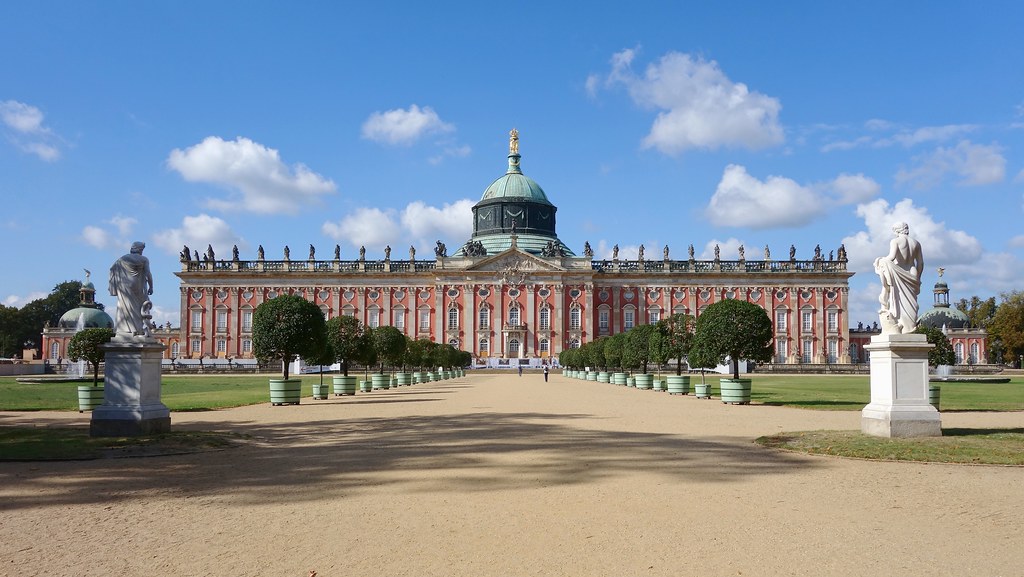
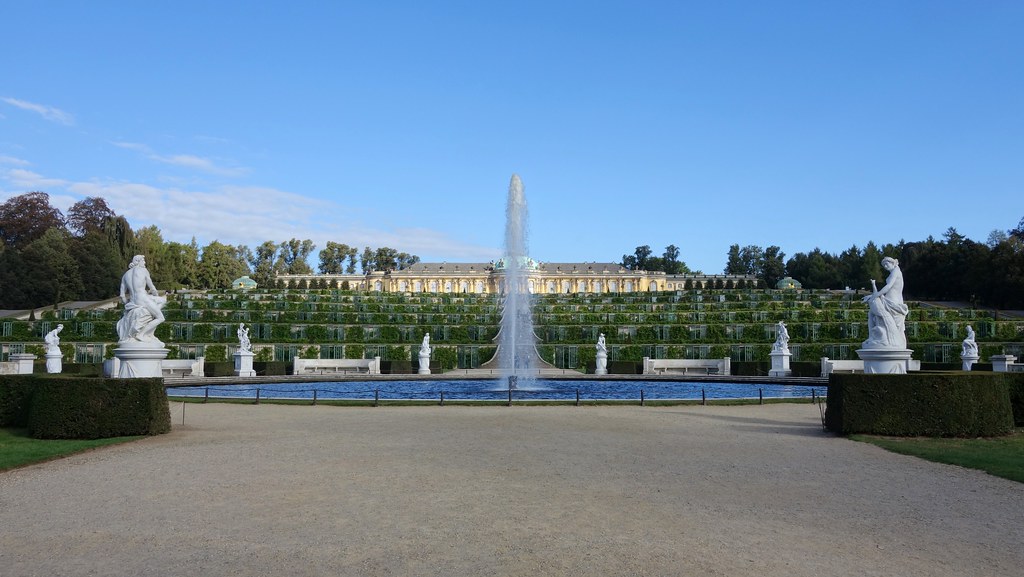
Sanssouci Park in Potsdam, Germany, is home to some neat historical palaces tied to the German monarchy. Above is the New Palace; below is Sanssouci Palace. Most of the buildings have been preserved and are open to the public for visits; some are used by the University of Potsdam.


 Ricky Leong